Featured Post

Volunteer or Apply for Teacher Fellowship

Volunteer or Apply for Teacher Fellowship at Adharshila Learning Centre for the session 2017 – 18 Beginning October-2017 We ...

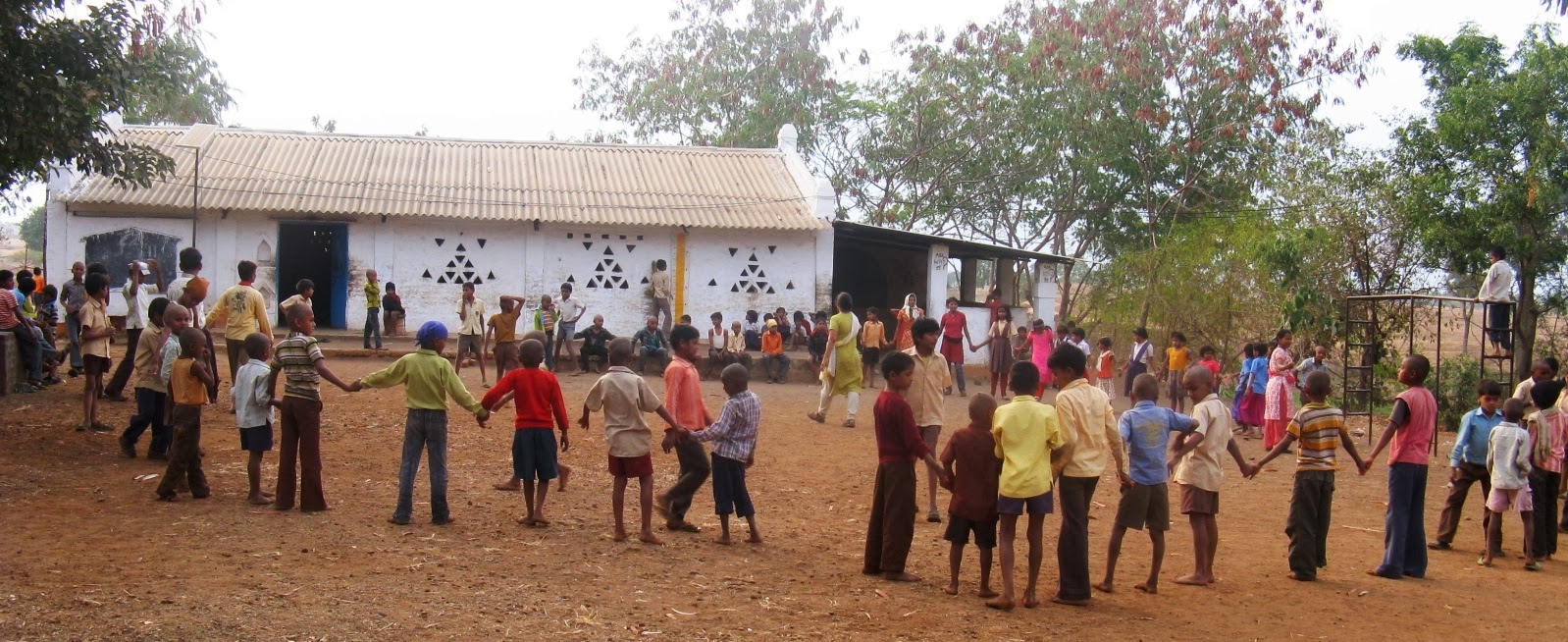
Adharshila Learning Centre is a unique school for adivasi children in Madhya Pradesh that views education as a tool for liberation...and a place of fun.

The Adharshila Learning Centre was started in 1998 by the Veer Khajiya Naik Manav Vikas Pratishthan.

The children have an active role in running the school.

Sunday, July 28, 2013

Some Pictures ...


Trikon Khidki Waala School

Children's Energy - Written by stencil made from newspaper

Map of Sakad village made in student project


Film Making Workshop


A play based on the Bhima Naik's struggle in 1857


Naatak India Company (Adharshila in the back)

Naatak India Company Team

Tantiya Bhil Kabaddi Competetion for village youth 2011


Exposure Tour


Collecting Local Varieties of Seeds


Rock Collection - waiting for a Geologist


Making a Mask - Craft


Roping the Gymnasts 1


Head Stand on Rope


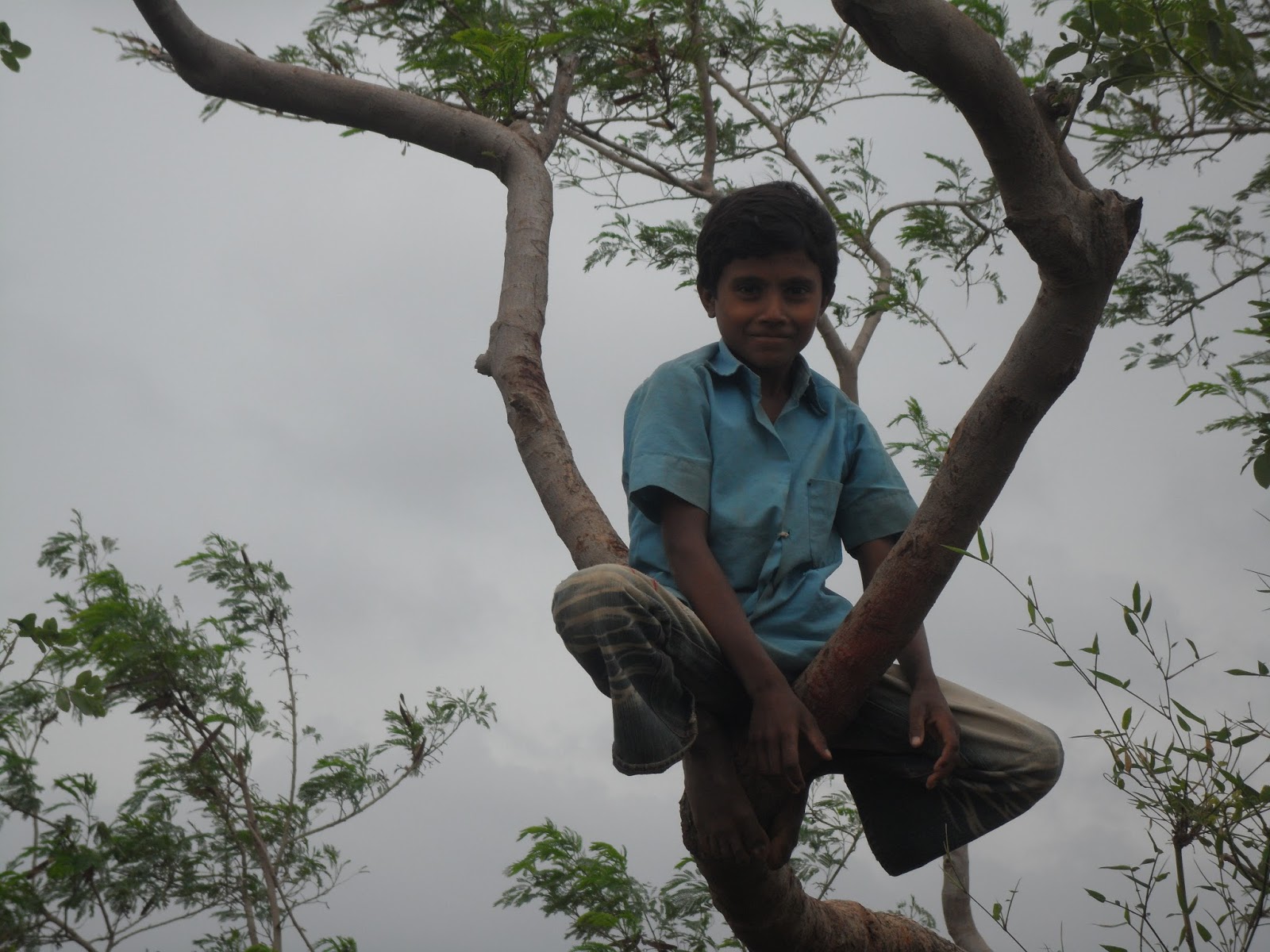
Favorite Sitting Place 


Another Favorite Place


A volunteer taking a class


Saturday, June 8, 2013

Solar Prakash - Finally follows his heart


Prakash was one of the 32 adivasi kids, the first batch, who came to stay and learn at the Adharshila Learning Centre in 1998. I still remember him in his green shirt and knickers, sucking his thumb. Dark, short with bright eyes.

His flair for things mechanical came to the fore when we were going on a trip and found that the zip of our handbag was broken. Promptly some one in the crowd ( which was a permanent feature in the verandah, more so on a special occasion of our going) said, “ Prakash can do it”.  And in less than 10 minutes he did something and the zip was moving freely. 

At age 10 or 11 he was one of the children who had their own individual programs and did not follow the class routine. He went to class as and when he felt like. The main thing in his program was origami. He was a master at it. He was able to follow complex diagrammatic instructions of origami books and make things. We even contacted some friends to keep him as apprentice but didn’t work out. Besides learning origami he took a class in Adharshila on origami and also went to a Public School in Sendhwa to teach origami. But still sucking his thumb. In those days we tried to make individual learning programs for children, if they too agreed.

Prakash testing and repairing a solar lantern at Adharshila

He was a regular candidate for the model making for the annual function exhibition for parents. He was invariably in our house late nights helping in school chores, binding books, repairing kerosene stoves with Jayashree, watching me at the computer. He was the natural choice to help the guy who came to install the first solar panels at Adharshila or the electricians and plumbers who came to do fittings. Since then he became the local maintenance in charge. From this he graduated to changing bulbs, fuse wires, checking faults when some room didn’t have electricity which could be as often as every day. By the 10th grade(which he did as a pvt. Candidate) he was the Chief Electrician at Adharshila (of course there were limits to his fiddling).

By the time he was in 10th class he had apprenticed at many places - Takli Karyalaya, Dhule, Maharashtra to make a Solar Cooker. At Sampark, an NGO in Jhabua, MP, to learn about solar fittings, at the workshop at IIIT, Hyderabad, at a TV repair shop near his village. ... This is part of the philosophy of Adharshila to place children, according to their interests, in places where good work is happening. It is part of making children strong and as much a part of the learning pedagogy.

We already had a dream (like all foolish  parents) that how Prakash will be working to solve energy problems of the villages of his area when he grows up. How he will learn while working with the best people in the field of alternative energy. Accordingly we advised him to do ITI diploma after 10th as he was not being able to cope with science and math subjects. But this he refused due to the influence of a bright student, the unofficial mentor of most students whose main mission was to put everybody on the regular school track rather than follow one’s interests(which was the crux of our advise).After 10th he was at Adharshila through 12th and also in his first college year helping out at Adharshila while studying in the town. By now he had become more adventurous. His spirit of adventure overtook his skills and he was responsible for ruining many chargers, solar lamps, speakers, torches and we were wary of letting him handle such fancy stuff, alone. Learning, we consoled ourselves. Hadn’t we heard stories of discovers and scientists breaking clocks, radios and other home gadgets in their childhood ?

After school we again tried to convince him to pursue his interests by interning for longer periods at various organizations working in alternative energy, solar, mechanical workshops etc. We had a long plan for him for the next 3 years of non institutional learning through apprenticing. But now he wanted to experience college life and got admitted to the useless degree college of Sendhwa for a BA course which he hardly attended. (He didn’t take math in 12th as he couldn’t cope with it). By now we had learnt many lessons and understood what peer groups mean ! So we had become more resigned than disappointed.

Hey this was supposed to be an inspirational success story ? Wait. We are almost there.Anyway last year he went to Indore and got himself admitted to MA Hindi ! What ? Why ? Because his bosom friend was also going to Indore for the same course.. But thankfully in two months he realised that he was on a blind trail and when we asked him if we should look for some work for him in the areas he was interested in, he finally said yes. Vow. At last!!Now through friend of friend of friend we got in contact with the person who runs THRIVE, a company making solar lamps and like his name Prakash is now working with them for the last two months. We are keeping our fingers crossed. Will he stay ? more importantly will he go beyond soldering and master its science and engineering aspects also ? Will he be able to or inclined to use his skills more usefully than just for his livelihood ?
Prakash at THRIVE with Abhishek a 10th class student at Adharshila

There are other stories like this, and we hope they will keep happening but by no stretch this story can be said to be the genral story of children at Adharshila. This shows what we are striving for. This is what all schools should strive for. This shows that it is possible without a regular school, school books, in remote villages.. anywhere.

Its a very long journey. For us, its hope and patience. His journey has just begun. Most children don’t reach this point which may or may not come after 15years of schooling.  Can every child be like Prakash ? Can we build institutions which take out what the child has in him?

Friday, March 15, 2013

The Veena player at Adharshila

I was happily sitting in a train bound to Kota when I got a call from Mr. Niranjan Haldar asking me when he can go to see the school ? Vow. Hardly anybody says this. Usually we are calling people to come over.

Aikla choulo re.....
 The next Saturday after much ghabrahat (usual in middle age men before a journey) we were in a bus to Sendhwa. I forgot to tell that Mr. Haldar or Haldar Sir, as he is popularly known in Indore, is a musician of great repute besides being a regular artist at the All India Radio. One of the few in India, definitely in Madhya Pradesh who play the Vichitra Veena, guitar and the synthesiser with equal ease. A true synthesis of the traditional and the modern. We got acquainted with him as our children learn music from him.


Reached Sendhwa by noon and from there to Adharshila in an auto-rickshaw, waiting for us at the bus stand. What luxury !

The children had a two hour session with him in the evening where he taught them the famous song - Aikla Choulo Re. Initially he was sceptical about teaching a Bengali song, that too Robindra Sangeet to adivasi children but the scepticism vanished in the first ten minutes seeing the ease with which the children picked up the lyrics as well as the tune. We helped them by writing the lyrics on the black-board.
Presenting the Haat calender to Mr. Haldaar


We were not so surprised as we had seen them pick up Marathi, Tamil and Chattisgarhi songs which earlier visitors had taught them.


It was great to hear the anthemic song, Aikla Choulo whispering out of the door and jaalis of the hall. How easy it is to be one... with total strangers. Of course music makes it so much easier. Listen to the music -
http://www.facebook.com/photo.php?v=428391290581649

Bareli folk, filmi and patriotic song session.
Prakaash, presenting a mud horse used in tribal ceremonies,
with Jayashree. .
Next day again we had a session with another song - the Hindi version of another Robindra Nath song - Anand loke mangala loke and later as we were chatting in our verandah there was an impromptu session of Filmi, Folk and Patriotic songs. The children, Haldar Sir on the harmonium, and visitors from Bangalore, students of Azim Premji Institute - were all in it together.

But there's always more ... especially when you are at Adharshila, the heart of rural and that too tribal India - there was no electricity when we reached. None at night and not the next day too ... No electricity means no water as it has to be pumped. But HS was quite sporting and was even ready to visit the field in typical rural style.. but fortunately there was some water in the drum. Teachers enjoy some privileges.

The cot under the million star sky always makes up for the inconveniences of the day. We too on our part made it up with the traditional tribal feast for guests - kookdi and kudri (chicken and rice).

Hope we have more interaction with him in the future.

Calender -2013 - Haats - Weekly Markets

Great things and VIPs always arrive a little late ...and always manage to make a place for themselves in the front rows! and then like the traffic guys keep reminding us - better late than never ! so...finally the Calender -2013 is out.....and finished.. all of the 1000 copies. The money raised will be used for Adharshila.


 It is based on the theme of rural weekly markets or haats - a vibrant place for economic and social exchange in rural areas. The word Haat seems to be derived from the word Haata/Saata which means to exchange goods in place of each other or barter, in the bhilali, bareli languages of the adivasis of western India.

It seems there are about 47000 haats in India which come alive everyday with farmers, artisans and small traders living in the remotest of places. Everyday after the dust and noise of laughter, bargaining and fights, the market falls silent only to be resurrected the next day at some other place. People gather and disperse and trade worth crores happens without any middlemen. 
Who needs retail chains ?


Haats are democratic markets where producers sell their ware directly to consumers. Baskets, pots, vegetables, seeds, cloth.... anything.

People converge at the Haats not just to buy and sell but also to meet relatives, friends, a daughter married in a distant village, resolve feuds and for many other social reasons.

Thursday, January 17, 2013

Naatak India Company

Naatak India Company - the theater group of the children of Adharshila is going strong this year. This year's new production - 'Bhanai' is a play based on the state of education in rural areas. The play has been staged in 5 places in Madhya Pradesh and Gujarat in the last 3 months and has been performed by one group in Shahdol - district of MP.

Father and Son fighting after the son fails to get a job and wants to set up a liquour shop.
About the play
The play shows how the dreams and aspirations of the adivasis and the lofty ideals of the constitution and the post independence leaders are betrayed by the education system. It has hilarious scenes of stereotypical Govt. schools in villages. The teacher holds the play and sends the audience in fits of laughter. The second part of the play shows a TV panel discussion with the minister about the abysmal condition of Govt. schools where he proposes that privatization is the only alternative. The panelists refute these suggestions based on their experiences with private services in health and transport. The play ends with exhorting the parents to take a more pro-active role in improving the schools and to protest against privatization of education. The best part of the play is that it brings out the education scenario in a very entertaining manner.

The play has been written by Amit with expert comments from Jayashree.

We were lucky to have Avijit and Aakash to help in the rehearsals, sets and costumes for the first performance. The play was staged first at the State Convention of the Indian Peoples Theatre Association at Indore in October 2012. After that it was staged at Jan Vikas, Indore, Adviasi Sammelan - Palsud, District Barwani, Adharshila Learning Centre and National Adivasi Mahasammelan, Sagbaara - Gujarat.

We are game for going anywhere to stage the play, provided the hosts bear the costs of travel, hospitality and honorarium!

Have a look at the some photos of the this and other plays at -
http://www.facebook.com/NaatakIndiaCompany

Thursday, November 1, 2012

Math on the Farm

As I started listing the Math activities that we have done on the campus, I reached 50 topics very fast. Here's one.

We wanted to figure out the per acre yield of vegetables on our Center's organic farm. So with great enthu I took the Amazon and Nile group children ( Age 12 -14, roughly 6th and 7th grade) on the farm. This I explained to them and after a frantic search of the campus and inquiring from the adults we were able to find  ropes and an old steel tape, left on the campus by a mason. Children divided themselves in groups for various vegetable plots viz. kaddoo - pumpkin  lauki- bottle gourd, gilki - gourd, bhindi - ladyfinger and chavli.- beans. 

It started on a good note as most children knew that to calculate the area we need length and breadth of a rectangle. Discovery 1 - the plots were rectangles. But one was not. It was a trapezium. This group had to struggle the most. Later on the groups also struggled with this problem in the class. This stage of measuring and multiplying to get the area of the plot was fairly easy. The main problems were like how to write 34 meters and 50 cm. in decimal form and add ? Should we write 34.5 cm or 34.5 m ? After multiplying, how to write the answer - 214.65 m/cm or sq. m. ?
And one more thing - the steel tape was broken. Its marking started at 30 cm. It took some time to figure out that the meter that we were measuring was actually just 70 cm. Also it was easier to measure with a stick  rather than a rope, that I had suggested.

The next steps were very sticky. Firstly we had to convert the square meters to gunthaas - the measure used by organic farmers around us - especially those associated with Dabholkar and the 40 guntha experiment. One guntha is 100 sq.m. for this conversion children had to go back to the 5th class problems eg. 5 pencils cost 10 rupees so what is the cost of one pencil. Sounds easy but with numbers like 259.78 sq. m it looks impossible to children. Any way once one or two smart guys had done it they taught the others. They learnt this after doing similar simpler problems ( at least at that time they did it. Actually I cant say that they learnt it). Then they had see the mess register and figure out the total amount of vegetables produced and find out the production per guntha. And finally the production that would happen on one acre. One acre is 40 gunthaas. 

After toiling for two - three hours one group got the result. The other groups got frustrated and left it. They tried it the next day with help from a senior who teaches them maths.

The best part of all this was the result. The realization that we had produced quite a lot. Though we have to check the record productions for veges but the figures were pretty high for us, considering that we started from a totally barren peice of land. Most of the veges. went to about 20 quintals ( 2000 Kg./acre). The pumpkins were about 40 quintal an acre. Costed at Rs. 20/ kg this means Rs. 40,000/acre which is very good income as compared to other crops( not counting the marketing problems).

All the children were wide eyed and didnt believe their answers. Anyway it led to a discussion with the elder children about the usefulness of the school syllabus which does'nt teach to earn from their own resources. We are able to produce veges for the school mess - 120 children and adults - enough for 3-4 months. How we wish that some children opt to learn this instead of blindly following the school under societal pressure. Maybe someday...someone....

http://www.facebook.com/adharshila.learningcentre

Friday, October 5, 2012

Naatak India Company has a page on fb

Inspired by our success of the play 'Bhanai' in Indore, we have created a page on fb. The idea is to show the work of the Naatak India Company - our theatre group.
But not just this.
We also want to get in touch with other theatre people/ groups who can help take this work forward.
Like most of our other ventures the Naatak India Company is not a funded venture. We want to take it fwd. with the help of friends as volunteers and through the funds generated through the shows. Only if some people want to work on it on a full time basis, we will look for their fellowship support.

Though the page is new please like it and link it your blogs, accounts, etc.

Thanks